




Planning for surgery means getting your pre-surgery financial resources and estate planning documents in place first - just in case
While your pre-surgery checklist undoubtedly includes fasting and arranging a ride home, the most overlooked and most important jobs may be getting your emergency estate plans in place, just in case.
Read in this article
- Estate Planning for Surgery: What to Do Before Your Procedure
- The risks of surgery to your wallet and lifestyle your Doctor doesn't talk about
- Answering some of the questions you're probably not going to be asked by your treating doctor
- The Biggest Risk of Surgery Isn't on the Operating Table
- The Four Basic Human Capacities we all need to protect to feel safe
- Pre-Surgery Personal Checklist
- Frequently Asked Questions: Surgery & Financial Preparedness
Estate Planning for Surgery: What to Do Before Your Procedure
Planning for any type of surgery involves time, expenses, understanding the procedure and the possible recovery times ahead. You'll need to prepare your body, managing medications, help your family and friends know what to expect, and adjust your lifestyle for a smoother recovery. Sounds straightforward right? But what about the bigger picture?
What's the plan if something unexpected occurs and you lose more than just a few weeks off recovering and family or friends needs to step in and make decisions for you?
Nothing helps you focus on recovering like knowing you don't have to focus on your financials
The risks of surgery to your wallet and lifestyle your Doctor doesn't talk about
There are financial risks to surgery of any sorts - (and I'm not just talking about the separate anesthetists bill). All medical procedures carry additional risks - that's why they should not be considered lightly - and financial risks.
Many people recover from the surgery, only to struggle long term with the flow on financial effects.
- Nobody can tell the future, so preparing for surguy is an important time to prepare your financial backup plan and your estate plan too.
It also means understanding what the financial risks are and having a plan in place ahead of time, to help manage them.
Answering some of the questions you're probably not going to be asked by your treating doctor
- What's the plan if you be unable to make complex decisions while you recover? (like paying rent, talking with the property manager, repaying the mortgage and talking with the bank?)
- What's the plan if you unexpectedly need more time (and financial resources) to recover?
The Biggest Risk of Surgery Isn't on the Operating Table
People are resilient - given the right support. We're hardwired to find a way through most things. But what does that support look like in the context of modern life in Australia?
- Maslow's Hierarchy of Human Needs outlines the five sets of basic human needs (physiological, safety, love, esteem and self-actualisation) that motivate human behaviour.
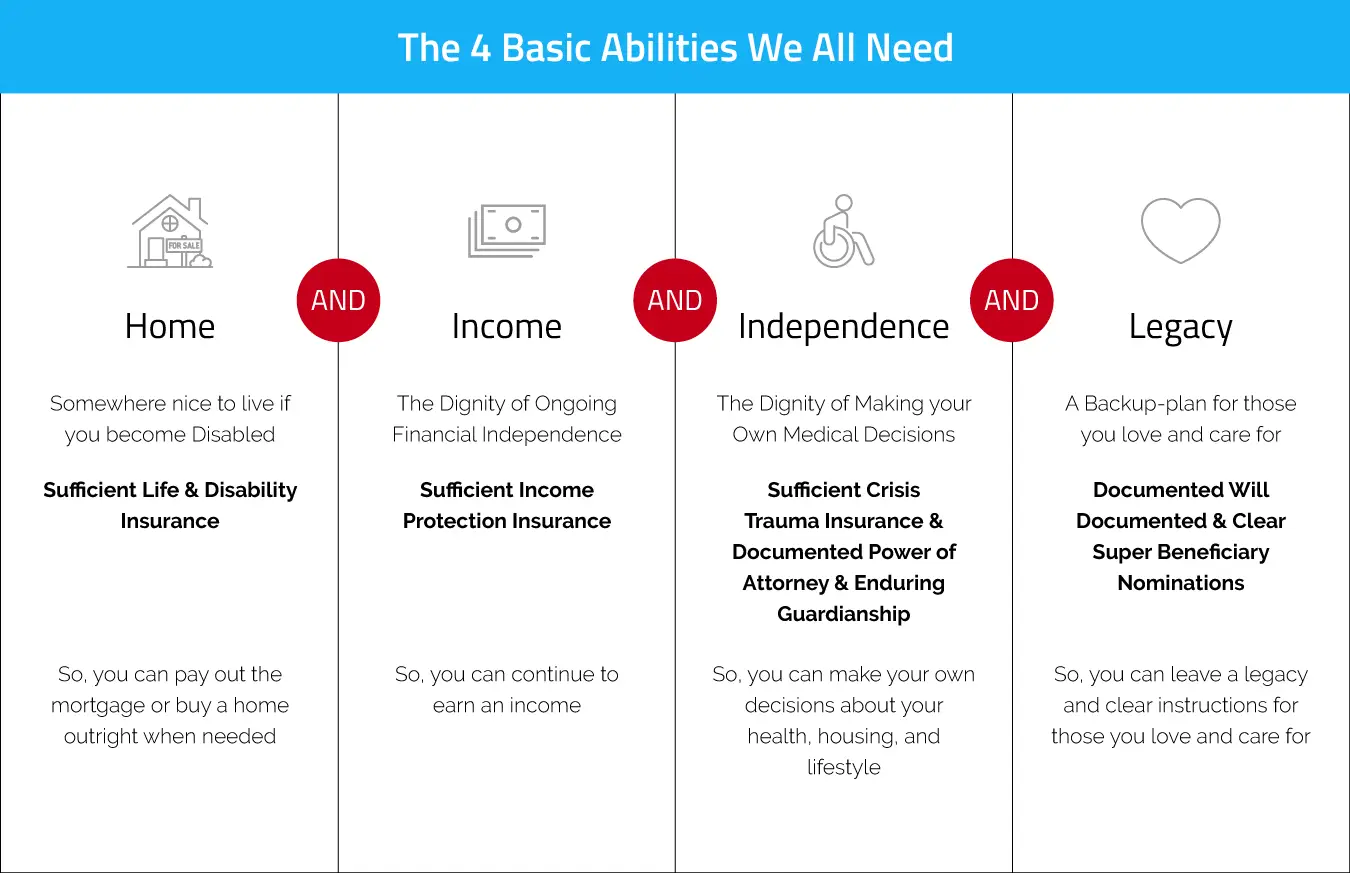
The Four Basic Human Capacities we all need to protect to feel safe
- The ability to be able to call a place Home
- The ability to continue to Generate an Income
- The ability to maintain personal agency and Independence, and
- The ability to be able to provide for those we love, to have a sense of purpose and future we call Legacy
A problem arises when we leave it too late to get these four moden capacities in place and supported with a plan.
Pro Tip: Use a password manager and do not get caught out using biometrics face recognition only option.
Pre-Surgery Personal Checklist
in printed form, make sure your personal records include these important information:
- Emergency Contact List (printed, not just on a locked phone).
- Direct Debit Audit (what needs to be paid in the next 30 days?)
- Location of the original Power of Attorney document
- The 'Zero-Day' Strategy: The best time to sign these documents is at least 14 days before surgery to allow for witnessing and processing.
- Passwords for Digital Assets: We suggest using a password manager so your appointed attorney isn't locked out of the very accounts they need to manage.
During times of immense emotional stress, people overestimate their ability to function well and underestimate the resources they’ll need to survive, recover and rebuild.
Frequently Asked Questions: Surgery & Financial Preparedness
Why do I need a 'financial checklist' for a medical procedure?
Your doctor handles the clinical risk, but surgery also carries lifestyle risk. If you are 'out' for longer than expected, the world doesn't stop. An emergency plan ensures that while you are recovering from anaesthesia or pain medication, your financial affairs remain stable. It's about making sure your recovery isn't derailed by a manageable financial hiccup.
Is an Enduring Power of Attorney necessary for minor surgery?
Yes. Without a legal document like an Enduring Power of Attorney, your family has no automatic right to access your bank accounts or sign documents on your behalf. Even for minor procedures, having this in place is a 'safety switch' that allows your life to keep turning if you are temporarily unable to handle complex decisions yourself.
What happens if I underestimate my recovery time?
During times of high stress, humans tend to overestimate their resilience and underestimate the resources they need. If recovery takes months instead of weeks, your 'Home' and 'Income' pillars are the first to be tested. Proper planning involves setting up a financial buffer and a 'human network' that can step in before your savings or sick leave are exhausted.
How do I protect my 'Personal Agency' while incapacitated?
True independence is the ability to have your wishes followed even when you cannot speak. By legally appointing a trusted person to act as your agent, you are exercising your independence in advance. It ensures that your choices regarding your home and your family are respected, rather than leaving them to the mercy of a default legal system or bank bureaucracy.
Call us today on 1300 137 403 or email us here for a no-obligation private chat about your situation.
 Drew Browne is a specialty Financial Risk Advisor working with Small Business Owners & their Families, Dual Income Professional Couples, and diverse families. He's an award-winning writer, speaker, financial adviser and business strategy mentor. His business Sapience Financial Group is committed to using business solutions for good in the community. In 2015 he was certified as a B Corp., and in 2017 was recognised in the inaugural Australian National Businesses of Tomorrow Awards. Today he advises Small Business Owners and their families, on how to protect themselves, from their businesses. He writes for successful Small Business Owners and Industry publications. You can read his Modern Small Business Leadership Blog here. You can connect with him on LinkedIn. Any information provided is general advice only and we have not considered your personal circumstances. Before making any decision on the basis of this advice you should consider if the advice is appropriate for you based on your particular circumstance.


